Stunning New Archaeological Discovery in Luxor Reveals Ancient Coffins, Tombs, and Cat Mummies
Luxor continues to amaze the world with its endless archaeological treasures after Egyptian Ministry of Tourism and Antiquities announced remarkable new discoveries at the Dra Abu El-Naga archaeological site on Luxor’s West Bank.
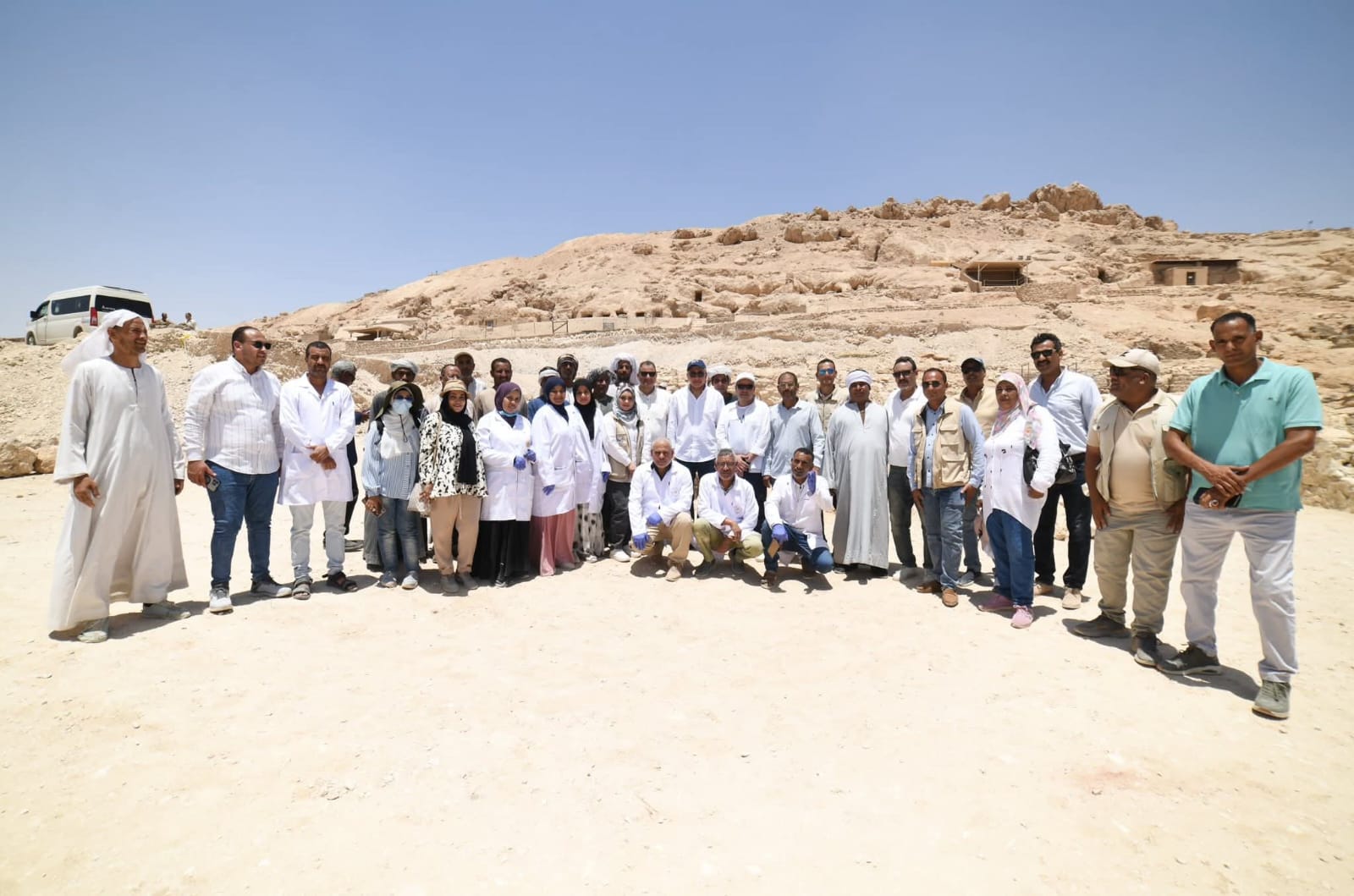
During an inspection visit, Egyptian Minister of Tourism and Antiquities Sherif Fathy reviewed the ongoing excavation work carried out by the Egyptian archaeological mission affiliated with the Supreme Council of Antiquities. The excavations uncovered a collection of rare wooden coffins, newly discovered tombs, and animal mummies dating back to several important periods of Ancient Egyptian history.
Rare Wooden Coffins Discovered in Excellent Condition
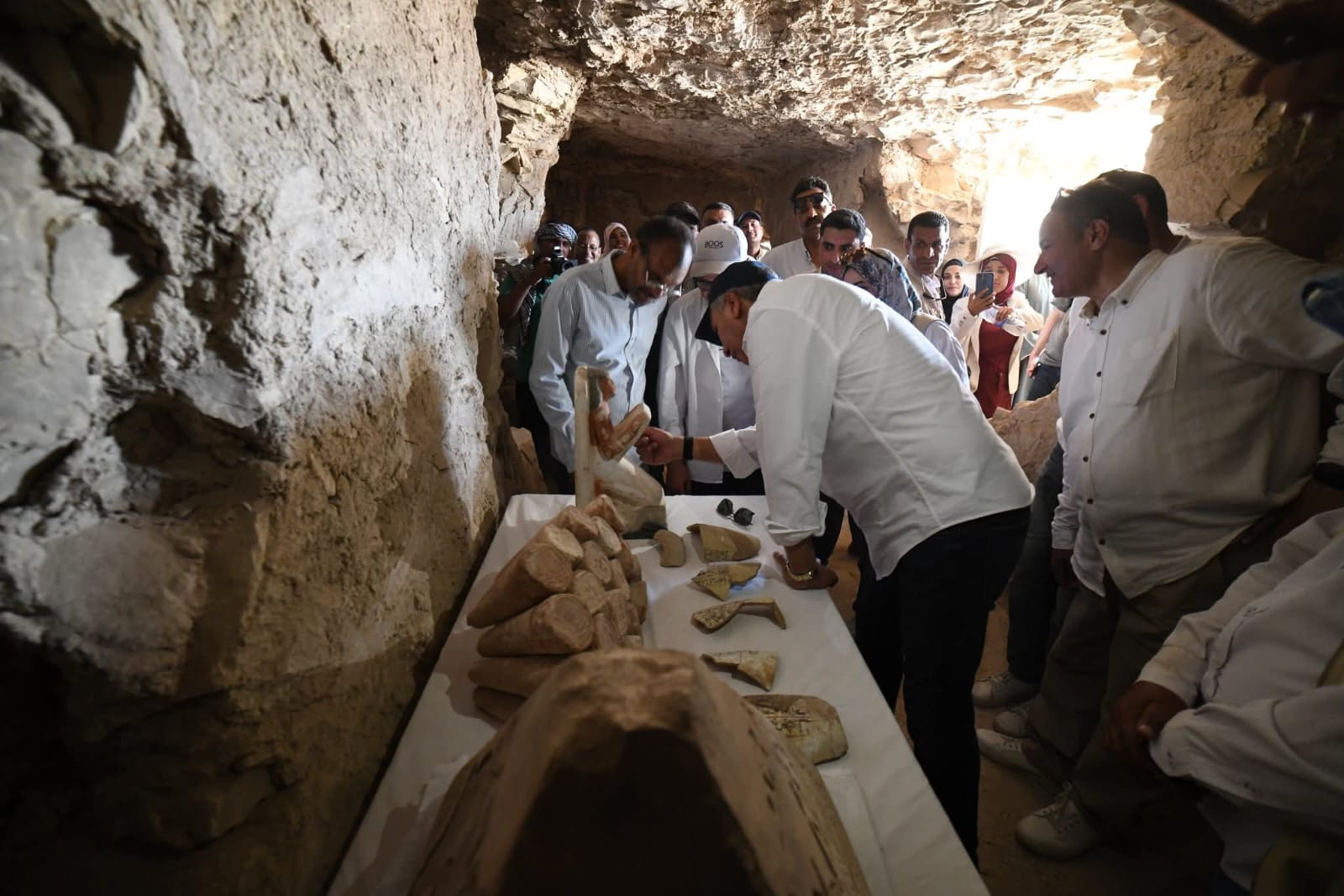
Among the most significant findings were 10 wooden coffins discovered inside a burial shaft located in the courtyard of the tomb of “Baki.” The coffins were found in remarkably good condition and feature colorful funerary scenes and hieroglyphic inscriptions from different historical eras.
Preliminary studies revealed that four coffins date back to the 18th Dynasty, including one belonging to a chantress of the god Amun named “Merit.” Another coffin dates to the Ramesside Period and belongs to “Padi-Amun,” a priest at the Temple of Amun, while the remaining coffins belong to the Late Period.
Archaeologists believe the shaft was reused as a cachette to protect the coffins after they had been transferred from their original burial locations.
Discovery of a New Tomb of an Amun Priest
The Egyptian mission also uncovered the tomb of the purification priest of the Temple of Amun, “Aa-Shef-Nakhtou.” The tomb includes a small courtyard, a rectangular burial shaft, and an entrance decorated with offering scenes and funerary texts leading into a burial chamber.
Inscriptions inside the tomb mention the names of the priest’s family members, including his wives “Isis” and “Ta-Kaft,” both of whom held the title “Chantress of Amun.”
This discovery provides valuable new information about religious positions and family life in Ancient Thebes.
Sandstone Pyramidion Adds More Mystery
Another exciting discovery was a sandstone pyramidion found inside tomb DP91. The artifact bears repeated devotional scenes of its owner, “Benji,” who held the titles “Scribe” and “Nobleman.”
Archaeologists have not yet located his original tomb, but experts believe it may still lie hidden near the excavation area, suggesting that more important discoveries could soon emerge from the site.
Discovery of Ancient Cat Mummies
The excavation team also uncovered a large burial deposit containing more than 30 mummified cats, including both wild and domestic cats wrapped carefully in linen.
Researchers believe these animal mummies date back to the Ptolemaic Period, when animal offerings played an important symbolic role in religious rituals and ceremonies in Ancient Egypt.
Luxor Continues to Fascinate the World
These extraordinary discoveries once again highlight the immense archaeological importance of Luxor and reinforce Egypt’s position as one of the world’s leading cultural and historical tourism destinations.
Archaeological teams are currently continuing restoration, documentation, and scientific studies of the newly discovered artifacts and tombs to prepare comprehensive research findings that will shed further light on Ancient Egyptian civilization and its complex social and religious systems.
Book your Experience now:
🌐 Official Website
📧 info@narmertours.com
📞 WhatsApp:(+20) 01210136814
📱 Facebook | Instagram | TripAdvisor